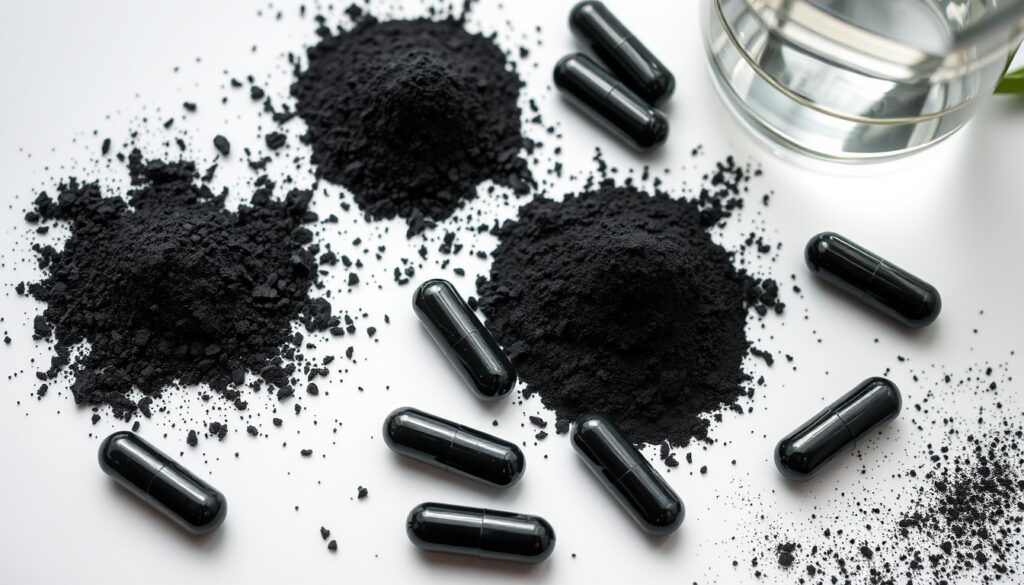
Activated Charcoal: Benefits, Uses, and Safety
Activated charcoal is a proven emergency treatment for certain poisonings, yet it is widely marketed as a daily detox supplement with little scientific backing. This guide separates the medical facts from the wellness myths.
Medical use: Emergency treatment for acute poisoning and overdose, effective within 1 hour ·
Typical adult dose: 50–100 grams (single dose) in hospital settings ·
Common side effects: Black stools, nausea, vomiting, constipation
Quick snapshot
- A porous form of carbon made from wood, coconut shells, or other carbon-rich materials (Healthline nutrition guide)
- Heated at high temperatures to create a large surface area for adsorption (Healthline nutrition guide)
- Used medically for poisoning and as a dietary supplement (U.S. FDA regulatory agency)
- Emergency treatment for acute poisoning and drug overdose (U.S. FDA regulatory agency)
- Sometimes used to reduce gas and bloating (StatPearls / NCBI medical reference)
- Not approved for routine detox by regulatory bodies (U.S. FDA regulatory agency)
- No evidence it removes toxins from the bloodstream (University of Utah Health toxicology)
- Does not ‘cleanse’ the body of long-term built-up toxins (University of Utah Health toxicology)
- May cause harm if used incorrectly (Healthline nutrition guide)
- Common side effects: black stools, nausea, vomiting (Healthline nutrition guide)
- Risk of constipation and intestinal blockage with high doses (StatPearls / NCBI medical reference)
- Can interfere with medication absorption (StatPearls / NCBI medical reference)
Six key facts about activated charcoal, from its composition to its medical role:
The table below summarizes the essential characteristics of this substance.
| Label | Value |
|---|---|
| Type | Substance |
| Source | Carbon-rich materials (wood, coconut shells) |
| Mechanism | Adsorption – binds toxins in the digestive tract |
| Medical use | Emergency treatment for poisoning and overdose |
| Common side effects | Black stool, nausea, vomiting, constipation |
| Not recommended for | Daily use without medical advice |
What are the benefits of taking activated charcoal?
Emergency treatment for poisoning and overdose
- Activated charcoal adsorbs many toxins in the stomach and intestines, preventing their absorption into the bloodstream (Deutsches Ärzteblatt International medical review).
- It is not effective for all poisons, including alcohols, strong acids, and alkalis (Deutsches Ärzteblatt International medical review).
- Administration should be decided by a clinician on a case-by-case basis (Healthline nutrition guide).
Potential relief from gas and bloating
- Some evidence suggests activated charcoal can trap gas-causing molecules in the gut, reducing flatulence and bloating (USDA technical report).
- This effect is temporary and not a substitute for medical treatment of chronic digestive disorders (StatPearls / NCBI medical reference).
Limited evidence for detox and hangover cures
- Claims that activated charcoal detoxifies the body or cures hangovers lack reliable evidence, according to toxicology experts (University of Utah Health toxicology).
- The substance does not bind alcohol or remove toxins already absorbed into the bloodstream (Deutsches Ärzteblatt International medical review).
For poisoning, activated charcoal is a proven lifesaver when used quickly. For gas relief, it offers modest, short-term help. For detox myths, the evidence simply isn’t there — and the risk of side effects makes daily use a gamble.
What happens if I take activated charcoal daily?
Risk of nutrient malabsorption
- Regular consumption can bind vitamins, minerals, and antioxidants in the gut, potentially leading to deficiencies (StatPearls / NCBI medical reference).
- This is a particular concern for people taking it as a food supplement or in trendy drinks (University of Utah Health toxicology).
Effectiveness may decrease with repeated use
- Repeated doses can reduce the effectiveness of routine medications by binding them in the gut (StatPearls / NCBI medical reference).
- No strong evidence supports long-term daily use for any health benefit (WebMD medical reference).
Potential for gastrointestinal blockage or constipation
- High doses can cause constipation and, in rare cases, intestinal obstruction (Healthline nutrition guide).
- Sorbitol-containing formulations increase the risk of vomiting (Healthline nutrition guide).
Daily use of activated charcoal is not recommended without medical supervision. The risk of binding nutrients and medications outweighs any unproven detox benefit. For most people, the cost and potential harm exceed any gain.
What does charcoal do for your gut?
Adsorbs gas-producing compounds in the digestive tract
- Activated charcoal can trap gas-causing molecules, which may reduce bloating and flatulence temporarily (USDA technical report).
- The effect is short-lived and does not address underlying digestive conditions (StatPearls / NCBI medical reference).
May reduce bloating and flatulence
- Small studies and some OTC products support its use for occasional gas relief (USDA technical report).
- Black stools are a harmless side effect when taken for this purpose (Healthline nutrition guide).
Not a cure for chronic digestive disorders
- Activated charcoal does not treat conditions like IBS, IBD, or chronic indigestion (WebMD medical reference).
- It is not a substitute for medical evaluation of persistent gut symptoms (University of Utah Health toxicology).
The implication: activated charcoal offers only temporary digestive relief and does not address the root cause of chronic gut issues.
When should we take activated charcoal?
Immediately after a suspected poisoning or overdose
- Timing is critical: activated charcoal is most effective within one hour of ingestion (Deutsches Ärzteblatt International medical review).
- For timed-release formulations, some experts extend the window up to six hours (Deutsches Ärzteblatt International medical review).
- Should only be given under medical supervision in an emergency (WebMD medical reference).
On an empty stomach for best adsorption
- Food in the stomach can reduce the binding capacity of activated charcoal (Deutsches Ärzteblatt International medical review).
- Taking it with water or a flavored drink is common in hospital settings (Healthline nutrition guide).
Avoid taking with other medications or supplements
- Activated charcoal can bind and reduce the absorption of oral medications (StatPearls / NCBI medical reference).
- Separate doses by at least two hours if used for non-emergency purposes (WebMD medical reference).
What this means: activated charcoal’s usefulness is tightly linked to timing and medical supervision, not routine wellness use.
How long does it take activated charcoal to clean your system?
Onset of action within 30–60 minutes
- When taken for poisoning, binding begins within 30 to 60 minutes (Deutsches Ärzteblatt International medical review).
- The effect is limited to the gut; it does not “clean” the bloodstream (University of Utah Health toxicology).
Clears the digestive tract within 24 hours
- Activated charcoal passes through the gut and is excreted in stool, usually within 12–24 hours (Healthline nutrition guide).
- Duration depends on dose and individual digestive transit time (StatPearls / NCBI medical reference).
Does not remove toxins already absorbed into the bloodstream
- Once a toxin has entered the circulation, activated charcoal cannot remove it (Deutsches Ärzteblatt International medical review).
- This is why it is only useful for poisons still in the stomach or intestines (WebMD medical reference).
The catch: the idea of “cleaning your system” is misleading — activated charcoal works only in the digestive tract on unabsorbed substances.
Upsides
- Effective emergency treatment for certain poisonings when given promptly
- Can provide temporary relief from gas and bloating
- Widely available and inexpensive
Downsides
- Not effective for many common poisons (alcohol, acids, metals)
- Can cause constipation, vomiting, and black stools
- Interferes with nutrient and medication absorption
- No proven benefit for detox or daily use
Confirmed facts and what remains unclear
Confirmed facts
- Activated charcoal effectively adsorbs many toxins in the stomach and intestines (U.S. FDA regulatory agency).
- It is used in hospital emergency rooms for acute poisoning and overdose (WebMD medical reference).
What’s unclear
- Effectiveness for hangover relief remains unproven (University of Utah Health toxicology).
- Safety of long-term daily use is not established (StatPearls / NCBI medical reference).
- Impact on gut microbiome is unknown (University of Utah Health toxicology).
“Activated charcoal is commonly given by health care providers to treat drug overdose or poisoning.”
WebMD medical reference
“Activated charcoal is the latest ‘detox’ trend. It’s typically made from carbon-containing material, like wood, that is heated at high temperatures.”
For consumers in the U.S. and beyond, the choice is clear: use activated charcoal for its proven medical purpose — emergency poisoning treatment — under professional guidance. For daily detox or gas relief, the science simply doesn’t support it, and the risks of nutrient malabsorption and medication interference are real. Skip the trend and stick with evidence-based options.
accessdata.fda.gov, webmd.com, medicalnewstoday.com, pmc.ncbi.nlm.nih.gov, webmd.com, canadainsight.org
For a deeper look at how activated charcoal works in the body, see this detailed guide on activated charcoal benefits and uses.
Frequently asked questions
Can I take activated charcoal with other medications?
No, activated charcoal can bind to many medications and reduce their effectiveness. It should be taken at least two hours apart from other oral drugs (StatPearls / NCBI medical reference).
Is activated charcoal safe during pregnancy?
There is limited safety data. It should only be used in pregnancy under medical supervision for poisoning emergencies (WebMD medical reference).
What foods contain activated charcoal?
Activated charcoal is sometimes added to juices, smoothies, ice cream, and even pizza for a black color. The FDA allows it as a food additive under certain conditions (USDA technical report).
Does activated charcoal whiten teeth?
Some toothpaste products contain activated charcoal, but evidence for whitening is weak. It may be abrasive and damage enamel over time (Healthline nutrition guide).
How much activated charcoal should I take?
For emergency use, the typical adult dose is 50–100 grams. For digestive relief, doses vary by product; follow label instructions. Do not exceed recommended amounts without medical advice (WebMD medical reference).
Can activated charcoal cause constipation?
Yes, constipation is a common side effect, especially with high doses. Drinking plenty of water can help, but persistent constipation should be reported to a doctor (Healthline nutrition guide).
Is activated charcoal the same as barbecue charcoal?
No. Barbecue charcoal is not processed for medical use and may contain additives. Only activated charcoal made for medical or food purposes should be consumed (Healthline nutrition guide).
More related posts
 Translate English to Nepali – Best Free Tools and Apps
 Roy Wood: Biography, Net Worth, Songs, and Personal Life
 Rick Stein: Heart Surgery, Divorce, Michelin Star Facts
 Where’s Randy Orton? The Viper’s WWE Return Explained
 Paul Merton: Biography, Weight Loss, Relationships & Career
 When Do Boys Stop Growing – Age, Timeline and Factors
 Man City vs Sunderland: How to Watch, Match Recap & Key Facts
 Jerry Seinfeld Net Worth: Biography, Wife and Controversy