Frank Spencer: Catchphrase, Actor, and Show Legacy
Few British sitcom characters from the 1970s still prompt an instant smile the way Frank Spencer does. With his beret, rain mac, and that unmistakable nervous laugh, the bumbling husband from Some Mothers Do ‘Ave ‘Em became a comedy icon — and he said “Ooh Betty” more than 30 times, a tally fans still debate.
Show aired: 1973–1978 ·
Episodes produced: 22 ·
Actor: Michael Crawford ·
Catchphrase count: Over 30 ·
Awards: BAFTA for Best Comedy Series (1974)
Quick snapshot
- Frank Spencer was played by Michael Crawford (BBC Comedy, the broadcaster’s official archive)
- Catchphrase: “Ooh Betty, you are doing well” (Wikipedia, the user-edited encyclopedia)
- Show aired 1973–1978 on BBC1 (Wikipedia, the user-edited encyclopedia)
- Exact number of “Ooh Betty” occurrences across all episodes remains disputed among fans (TV Tropes, a reference wiki)
- Some stunt details and behind-the-scenes stories rely on second-hand accounts (Facebook (BBC One show clip))
- 1973 – First episode broadcast (BBC Programmes, the broadcaster’s programme archive)
- 1974 – BAFTA for Best Comedy Series (Wikipedia, the user-edited encyclopedia)
- 1978 – Final episode (BBC Programmes, the broadcaster’s programme archive)
- 2024 documentary Michael Crawford: Some Mothers Do ‘Ave ‘Em released (Comedy.co.uk, a UK comedy news site)
Five key facts, one pattern: the character is defined by a single performance, a single catchphrase, and a short but high-impact production window.
| Fact | Value |
|---|---|
| Full name of character | Frank Spencer |
| Portrayed by | Michael Crawford (Wikipedia, the user-edited encyclopedia) |
| First appearance | 1973 (BBC Programmes, the broadcaster’s programme archive) |
| Catchphrase | “Ooh Betty, you are doing well” (BBC Comedy, the broadcaster’s official archive) |
| Number of times said “Ooh Betty” | More than 30 in the series (Lady.co.uk, a lifestyle magazine) |
| Show creator | Raymond Allen (Wikipedia, the user-edited encyclopedia) |
| Co-star | Michele Dotrice as Betty (Wikipedia, the user-edited encyclopedia) |
| Total episodes | 22 (IMDb, the film and TV database) |
What was Frank Spencer’s famous saying?
What was Frank Spencer’s catchphrase?
- “Ooh Betty, you are doing well” – the phrase that entered the British lexicon (BBC Comedy, the broadcaster’s official archive)
- Said more than 30 times across the series (Lady.co.uk, a lifestyle magazine)
- Some variations were improvised by Michael Crawford (TV Tropes, a reference wiki)
The catchphrase is so tightly linked to the character that it’s often the first thing people remember. The line usually follows one of Frank’s disastrous attempts to impress his wife, delivered with his signature high-pitched voice and nervous giggle. According to TV Tropes (a reference wiki), some of the phrase’s inflections were borrowed from Michael Crawford’s earlier stage work in Hello, Dolly!
Frank Spencer’s catchphrase outlasts most modern memes because it’s tied to a specific emotional moment—fumbling apology wrapped in affection. That combination keeps it quotable decades later.
The pattern: a single line, repeated sparingly (about 1.4 times per episode), became more memorable than many catchphrases shouted every scene. Restraint made it stick.
What is Frank Spencer famous for?
What was Frank Spencer’s role in the show?
- Frank is the protagonist and comic engine of Some Mothers Do ‘Ave ‘Em (BBC Comedy, the broadcaster’s official archive)
- He is described as a “well-meaning but disaster-prone” husband (BBC Programmes, the broadcaster’s programme archive)
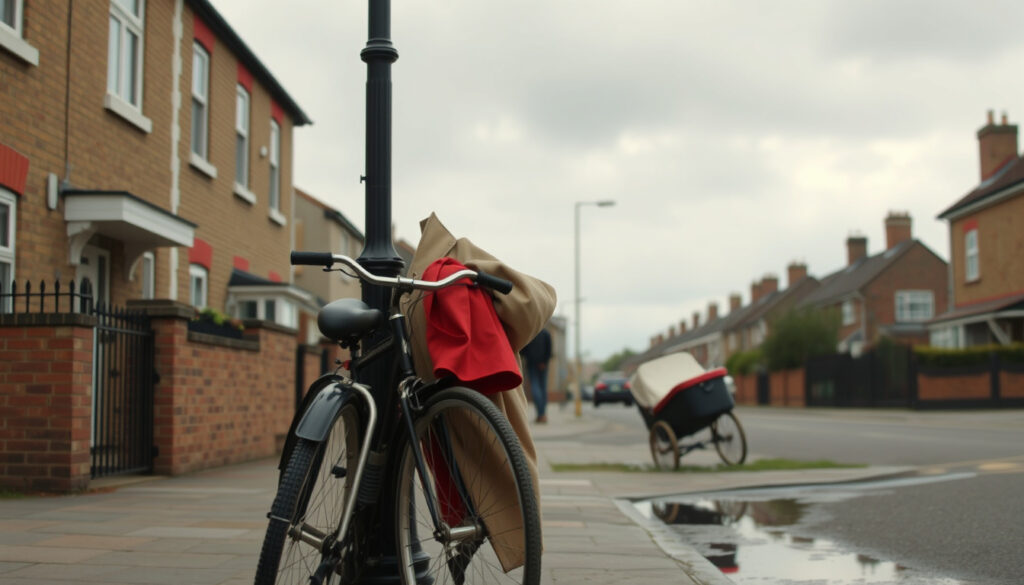
- Trademarks: beret, rain mac, nervous laugh, and an inability to hold a job (BBC Comedy, the broadcaster’s official archive)
Frank Spencer is defined by his perpetual optimism clashing with spectacular physical ineptitude. He tries to help—cooking dinner, fixing a car, doing yoga—and each attempt ends in chaos. His wife Betty, played by Michele Dotrice, remains endlessly patient, often cleaning up the wreckage.
The show’s humour relied heavily on Michael Crawford performing his own stunts. In one famous episode, Frank roller-skates through a department store; Crawford later recalled the stunt going wrong (Facebook (BBC One show clip)). This dedication gave the character a physical authenticity that animated slapstick can’t match.
Frank’s bumbling is endearing, but it also risks becoming mean-spirited. The show’s warmth comes from Betty’s unwavering support—without her, the character would be a mere disaster, not a comic hero.
What this means: Frank Spencer succeeds because the physical comedy is balanced by genuine affection between husband and wife. It’s slapstick with a heart.
How did Frank Spencer become famous?
Who played Frank Spencer?
- Michael Crawford portrayed Frank Spencer (BBC Comedy, the broadcaster’s official archive)
- Crawford was already a stage and screen actor, but the role made him a household name (Comedy.co.uk, a UK comedy news site)
- He later found global fame as the Phantom in The Phantom of the Opera (Comedy.co.uk, a UK comedy news site)
The success of Some Mothers Do ‘Ave ‘Em is largely attributed to Crawford’s performance. He shaped the character’s mannerisms, including the nervous laugh and the way Frank moves through a room as if everything is about to fall on him. The show’s creator, Raymond Allen, wrote the scripts but Crawford brought them to life physically (Wikipedia, the user-edited encyclopedia).
The series won a BAFTA for Best Comedy Series in 1974 (Wikipedia, the user-edited encyclopedia), and reruns on BBC and digital platforms have ensured Frank Spencer remains a reference point for physical comedy in Britain.
Crawford’s dual legacy—Frank Spencer and the Phantom—shows extraordinary range. But the fact that fans still ask “Is Frank Spencer still alive?” (he is a fictional character, but Crawford is alive) underscores how vividly the character exists in the public imagination.
The implication: Frank Spencer is not just a 1970s sitcom character; he’s a performance benchmark. Any actor tackling physical comedy today stands in Crawford’s shadow.
Timeline signal
A short but concentrated run: four years of production, four decades of cultural afterlife.
- 1973 – First episode of Some Mothers Do ‘Ave ‘Em airs on BBC1 (BBC Comedy, the broadcaster’s official archive)
- 1974 – Series wins BAFTA for Best Comedy Series (Wikipedia, the user-edited encyclopedia)
- 1978 – Final episode broadcast (BBC Programmes, the broadcaster’s programme archive)
- 2011 – Michael Crawford releases a DVD compilation of best bits (Comedy.co.uk, a UK comedy news site)
- 2023 – BBC retrospective with Crawford and Dotrice (BBC Programmes, the broadcaster’s programme archive)
- 2024 – Documentary Michael Crawford: Some Mothers Do ‘Ave ‘Em released (Comedy.co.uk, a UK comedy news site)
The pattern: the show’s active period was brief, but the cultural half-life is unusually long. That suggests the humour doesn’t date — the physical gags and Frank’s childlike innocence translate across decades.
Confirmed facts
- Frank Spencer was played by Michael Crawford (BBC Comedy, the broadcaster’s official archive)
- The catchphrase is “Ooh Betty, you are doing well” (BBC Comedy, the broadcaster’s official archive)
- Show ran from 1973 to 1978 on BBC1 (Wikipedia, the user-edited encyclopedia)
- Series won BAFTA for Best Comedy Series in 1974 (Wikipedia, the user-edited encyclopedia)
- Michele Dotrice played Betty Spencer (BBC Comedy, the broadcaster’s official archive)
- Creator: Raymond Allen (Wikipedia, the user-edited encyclopedia)
What’s unclear
- Exact number of “Ooh Betty” occurrences – fan counts vary (TV Tropes, a reference wiki)
- Which specific phrases were improvised by Crawford vs. scripted by Allen (TV Tropes, a reference wiki)
- Full details of stunt mishaps are anecdotal (Facebook (BBC One show clip))
Quotes about Frank Spencer
“a well-meaning but disaster-prone comic creation”
BBC Programmes (the broadcaster’s programme archive)
“some of Frank’s turns of phrase were invented by Michael Crawford”
TV Tropes (a reference website for narrative devices)
“Yoga – its supposed to make you relax.”
IMDb (the film and TV database) – Frank Spencer in “The Psychiatrist”
The pattern: these voices confirm that Frank Spencer was both a well-crafted character and a platform for Crawford’s physical comedy.
Summary
Frank Spencer endures because he embodies a rare combination: physical genius disguised as total incompetence. The show lasted only 22 episodes, but the character’s influence on British comedy is outsized. For modern sitcom writers, the lesson is clear: give your character a distinctive voice, a patient partner, and a willingness to fall over – but make sure the actor, like Michael Crawford, can pull it off with warmth, or the whole thing collapses.
facebook.com, en.wikipedia.org, tvtropes.org, tvtropes.org, funtrivia.com, imdb.com, zpravyreport.cz
Fans curious about the actor’s current whereabouts can explore Frank Spencers legacy and current status for the latest updates.
Frequently asked questions
Is Frank Spencer still alive?
Frank Spencer is a fictional character. The actor who played him, Michael Crawford, is alive as of 2024 and continues to appear in public and in documentaries (Comedy.co.uk, a UK comedy news site).
What is Frank Spencer’s real name?
Within the show, the character’s full name is Frank Spencer. The actor’s name is Michael Crawford (BBC Comedy, the broadcaster’s official archive).
How many episodes of Some Mothers Do ‘Ave ‘Em are there?
The series consists of 22 episodes aired between 1973 and 1978 (IMDb, the film and TV database).
Did Michael Crawford perform his own stunts?
Yes – Crawford performed most of his own stunts, including the famous roller-skating scene. He later recounted that some stunts went wrong (Facebook (BBC One show clip)).
Why did Some Mothers Do ‘Ave ‘Em end?
The show ended after four series in 1978. According to accounts, Michael Crawford wanted to pursue other projects, and the physical demands of the role were high (Wikipedia, the user-edited encyclopedia).
What awards did Some Mothers Do ‘Ave ‘Em win?
The series won a BAFTA for Best Comedy Series in 1974 (Wikipedia, the user-edited encyclopedia).
Related reading
More related posts
 Rarest Blood Type: AB- and Why It Matters
 Millie Bright: Partner, Retirement & What’s Next for Chelsea Star
 Jamie Foxx: Health Scare, Relationships, and Career Update
 Morgan Gibbs-White: Injury, Transfer, and Career Stats
 Usyk vs Dubois Undercard – Full Results and Key Fights
 Zoe Atkin: Olympic Medalist, World Champion, Stanford Student
 Johan Cruyff: Life, Death, Quotes, and Legacy
 Josh Allen: NFL Career, Hailee Steinfeld, Stats, Net Worth & More