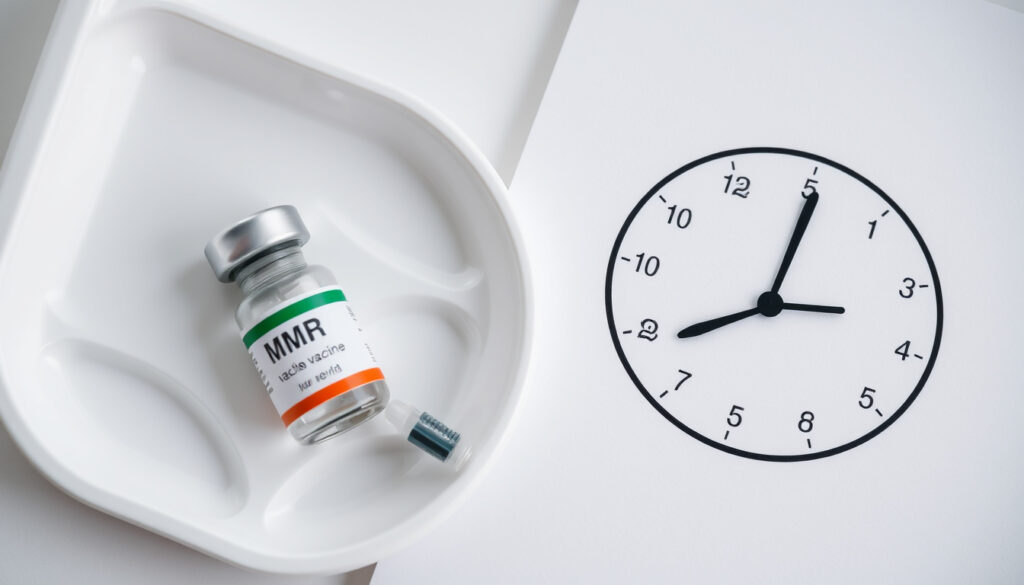
MMR Injection: Schedule, Side Effects & Booster Guide
You probably got your MMR shot as a kid, but that doesn’t mean you’re still protected. With measles outbreaks resurging in parts of the US and Europe, adults are increasingly asking whether they need a booster. The MMR injection — the vaccine against measles, mumps, and rubella — remains one of the most effective public health tools, yet many people over 30 have never checked their immunity status. This guide lays out the schedule, the science, and the real-world decisions you face today.
Doses recommended for full protection: 2 ·
Years MMR protection typically lasts: Lifelong for most ·
Age first dose is given (routine schedule): 12–15 months ·
Age second dose is given: 4–6 years ·
Effectiveness after two doses (measles): 97%
Quick snapshot
- MMR prevents measles, mumps, and rubella (CDC — U.S. public health agency).
- Two doses provide 97% protection against measles (CDC).
- MMR is very safe; serious side effects are rare (CDC — MMR Vaccine Safety).
- No credible link to autism — multiple large studies confirm this (CDC).
- Exact duration of protection in older adults without boosters. (Denver Health — travel clinic pricing)
- Whether universal adult booster will be recommended in the future. (Denver Health — travel clinic pricing)
- Cost variability across regions and clinics (Denver Health — travel clinic pricing).
- Whether MMR vaccine is covered by all insurance plans. (Denver Health — travel clinic pricing)
- Mild rash and fever can appear 7–11 days after vaccination (NHS — UK National Health Service).
- Swollen glands and joint pain may occur around 2–3 weeks post-vaccination (NHS).
- Adults born after 1957 without evidence of immunity should get at least one dose (CDC).
- Check with your doctor if you’re unsure of your vaccination status. (CDC)
- Cost per dose ranges from $101 to $142 in the U.S. depending on location (Eastern Idaho Public Health — local health authority).
Six key specs, one pattern: the MMR vaccine is a live attenuated vaccine that delivers lifelong protection for most people after two doses.
| Specification | Value |
|---|---|
| Vaccine type | Live attenuated (weakened) viruses |
| Number of doses | 2 (routine schedule) |
| First dose age | 12–15 months |
| Second dose age | 4–6 years |
| Measles protection after 2 doses | 97% |
| Duration of protection | Lifelong for most people |
| Route of administration | Subcutaneous injection |
| Storage temperature | 2°C to 8°C (refrigerated) |
Adults who skipped a second dose or never got vaccinated face a real gap: two doses are the gold standard, but many Americans over 30 have only one.
What is the MMR injection?
MMR stands for measles, mumps, and rubella — three viral diseases that can cause serious complications. The MMR injection is a live attenuated vaccine, meaning it contains weakened versions of the viruses so your immune system learns to fight them without causing the disease. According to CDC — U.S. public health agency, two doses provide 97% protection against measles, and the vaccine is also recommended by NHS — UK National Health Service.
Which diseases does the MMR vaccine prevent?
- Measles: causes fever, cough, rash, pneumonia, and encephalitis.
- Mumps: causes swollen salivary glands, meningitis, and hearing loss.
- Rubella: causes mild fever and rash; especially dangerous to pregnant women (can cause birth defects).
How does the MMR vaccine work?
The vaccine stimulates your immune system to produce antibodies against all three viruses. Because it’s a live vaccine, it typically produces a strong, long-lasting immune response. CDC notes that most people who get two doses are protected for life.
Do adults need an MMR booster?
This is the question that has been driving more people to clinics. CDC states that adults born after 1957 who lack evidence of immunity should get at least one dose. Those at higher risk — healthcare workers, international travelers, college students — may need two doses separated by at least 28 days.
Should you get a measles vaccine booster?
- If you received only one dose as a child, a second dose is recommended.
- If you’re unsure of your vaccination status, a blood test (titer) can check your antibody levels.
- NHS advises that adults needing protection receive two doses at least one month apart.
Which adults should get a booster?
- Healthcare workers without evidence of immunity.
- International travelers to areas with measles outbreaks.
- People who attended schools or workplaces during an outbreak.
- Adults born after 1957 who have no record of vaccination.
The catch: many adults assume they’re immune because they got “the shot” as a child, but that often means only one dose. The difference between one and two doses is significant — 93% vs 97% effectiveness against measles.
How long does the MMR vaccine last?
For most people, two doses of MMR provide lifelong protection. CDC confirms that protection is expected to last a lifetime, but some studies suggest waning immunity in a small subset of adults. Harvard Health — academic medical publication notes that waning is more likely in people who received only one dose.
Does the MMR vaccine last for life?
Yes, for the vast majority of people who complete the two-dose series. However, during outbreaks, some adults with low antibody levels may be advised to get a booster. Yale Medicine — academic medical center recommends checking antibody levels if you’re unsure.
How long does the MMR vaccine last in adults?
Adults who received two doses as children are typically protected for decades. The uncertainty is greatest for those vaccinated before 1980, when the vaccine was less stable. CDC advises that anyone born after 1957 without documented immunity should get at least one dose.
Is the MMR vaccine 100% safe?
No vaccine is 100% safe, but MMR comes close. CDC — MMR Vaccine Safety states that the vaccine is very safe and most people have no side effects. Serious reactions are rare.
What are the common side effects of the MMR vaccine?
- Soreness, redness, or swelling at the injection site.
- Fever (mild, often 7–11 days after vaccination).
- Mild rash.
- Temporary joint pain or stiffness (more common in adults).
- Swollen glands in the cheeks, neck, or jaw (around 2–3 weeks post-vaccination).
Are there serious risks?
Rarely, a high fever can cause a seizure (febrile seizure) in children. MMR can also temporarily lower platelet count, but this usually resolves without treatment. NHS notes that severe allergic reaction (anaphylaxis) is extremely rare and vaccinators are trained to treat it immediately.
The most common side effects — mild fever and rash — are not dangerous but can be alarming if you’re not expecting them. They show your immune system is responding.
What age is MMR vaccine given?
The routine schedule is designed to protect children as early as possible while minimizing the risk of side effects from a live vaccine.
What is the standard MMR vaccine schedule for children?
- First dose: 12–15 months.
- Second dose: 4–6 years (before kindergarten or first grade).
CDC and NHS both follow this schedule.
Can infants get the MMR vaccine before 12 months?
Yes, in certain circumstances. Infants as young as 6 months can receive an early dose if they are traveling internationally or are in an outbreak area. However, this early dose does not count toward the routine series — they still need the two-dose schedule after 12 months.
The trade-off: early vaccination can provide protection during travel, but the immune response may be weaker. The CDC recommends that infants 6–11 months who travel receive one dose, followed by the usual two-dose series later.
The implication: parents who travel need to plan for an extra visit, not a shortcut to the standard schedule.
Upsides
- Two doses provide 97% protection against measles.
- Lifelong protection for most people.
- Very safe; serious side effects are rare.
- Free or low-cost in many countries (e.g., NHS, U.S. public health clinics).
Downsides
- Mild fever, rash, and joint pain are common.
- Rare serious side effects (febrile seizure, low platelet count).
- Cost for adults without insurance: $100–$142 per dose in the U.S.
- Need for booster in some adults is still debated.
Steps to get the MMR vaccine
Check your vaccination status
- Look for your childhood immunization record (yellow card, school records, or doctor’s file).
- If you can’t find it, ask your doctor for a blood test (titer) to check antibodies.
Where to get the MMR vaccine
- Your primary care physician’s office.
- Local health department clinics (often low-cost or free).
- Travel clinics or pharmacies (e.g., CVS, Walgreens).
What to expect during the appointment
- The vaccine is given as a subcutaneous injection (under the skin) in the upper arm.
- You may be asked to wait 15 minutes for observation.
- Common side effects (fever, rash) can appear 7–11 days later.
For American adults without insurance, one dose costs $101–$142. But the cost of a measles infection — hospitalization, lost work, potential complications — is far higher.
Clarity: what we know and what we don’t
Confirmed facts
- MMR vaccine prevents measles, mumps, and rubella.
- Two doses provide long-lasting protection.
- MMR is safe with rare serious side effects.
- No link between MMR and autism.
What’s unclear
- Exact duration of protection in older adults without boosters.
- Whether universal adult booster will be recommended in the future.
- Cost variability across regions and clinics.
- Whether MMR vaccine is covered by all insurance plans.
Expert perspectives on the MMR vaccine
Adults born after 1957 should have at least one documented dose of MMR vaccine. Those at higher risk — healthcare workers, international travelers, college students — may need two doses separated by at least 28 days.
CDC — U.S. public health agency
Adults who need protection from MMR generally receive two doses at least one month apart.
NHS — UK National Health Service
MMR and MMRV are both safe and effective. MMRV combines MMR with the chickenpox vaccine and is given only to children 12 months through 12 years.
Johns Hopkins Bloomberg School of Public Health — academic public health institution
If you’re an adult who received only one dose as a child, you may want to consider a booster — especially if you work in healthcare, plan to travel internationally, or are in a community with low vaccination rates.
For American adults, the decision is clear: check your vaccination records, or ask your doctor for a titer test — because the next outbreak might not wait.
seuhealth.gov, healthygallatin.org, bettercare.com, moh.gov.sg, immunisationhub.au, aspetuckhd.org, msdmanuals.com, culturetap.uk
For a detailed breakdown of potential reactions and dosing intervals, refer to this comprehensive guide on MMR injection side effects and schedule.
Frequently asked questions
Can I get the MMR vaccine if I am pregnant?
No, the MMR vaccine is a live vaccine and is not recommended during pregnancy. If you are planning to become pregnant, get vaccinated at least one month before conception.
What should I do if I miss the second MMR dose?
Get it as soon as possible. There is no need to restart the series — just catch up with the second dose, even if years have passed.
Does the MMR vaccine cause autism?
No. Multiple large-scale studies involving millions of children have found no link between MMR and autism. The original 1998 study that suggested a link was retracted for fraud.
Can adults get the MMR vaccine for free?
In the U.S., many health insurance plans cover the vaccine at no cost under Affordable Care Act provisions. Uninsured adults can often get it at public health clinics for $100–$142 per dose.
How soon after MMR vaccination am I protected?
Protection begins about 2 weeks after the first dose. Full protection is achieved after the second dose.
Is it safe to get the MMR vaccine while breastfeeding?
Yes, the MMR vaccine is safe for breastfeeding mothers. The vaccine viruses are not transmitted through breast milk.
Can I get the MMR vaccine if I have a cold?
Yes, if you have a mild cold without fever. If you have a high fever or moderate-to-severe illness, wait until you recover.
Do I need a booster after traveling to a measles outbreak area?
If you have evidence of two doses of MMR, you are likely protected. If you are unsure, a blood test can confirm immunity.
More related posts
 Reece Walsh: Age, Height, Relationship, Injury & Career Facts
 Lord Farquaad: Origin, Quotes, Parody, and Height Explained
 Brian McFadden: Relationships, Career & Controversies
 Evel Knievel: Death, Stunts, and Last Words
 Maris Grand Waterpark Resort: Reviews, Location, Price
 England v Australia Rugby 2025: How to Watch Both Codes
 Cast of Midsomer Murders – Actors, Characters and Key Changes
 Emergency Electrician Near Me: Costs, Response & Safety