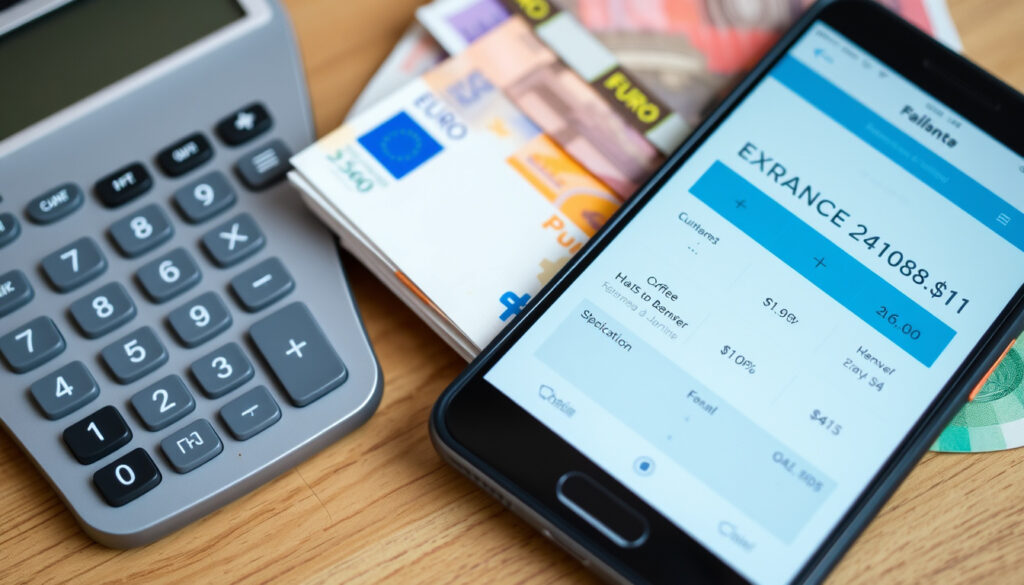
150 Euro in Pound : Be t Rate and Fee
You’ve got 150 euros in your pocket and need to know how much that is in pounds. Maybe you’re planning a trip to the UK, sending money to family, or just curious about the exchange rate. Whatever the reason, the answer isn’t as simple as a single number — the final amount depends on which service you use and when you convert. This guide breaks down the real cost of converting 150 euros to pounds, comparing rates from Wise, Revolut, banks, and the Post Office.
Current live EUR/GBP exchange rate (mid-market): 0.8598 GBP per EUR (as of March 2025) ·
Typical fee for currency conversion services: 0.5% to 3% of the transferred amount ·
Amount received for 150 EUR at mid-market rate: 128.97 GBP ·
Difference between best and worst rate provider: Up to 7 GBP for 150 EUR conversion
Quick snapshot
- Mid-market rate changes every second; the provided rate is indicative (Revolut Currency Converter)
- Wise uses mid-market with a transparent fee (Wise Blog on Revolut rates)
- Revolut applies a 1% fee on weekends for Standard plan (Revolut Compare page)
- Exact rate at the post office may vary by location and demand
- Future GBP strength depends on unpredictable economic policy changes
- EUR/GBP rate updates in real-time; the rate you see now may differ in seconds (European Central Bank reference rates)
- Use a comparison tool to lock in the best rate for your 150 euros
- Consider timing: weekday conversions avoid weekend markups
| Key facts | Value |
|---|---|
| Current EUR/GBP rate | 0.8598 (March 2025) |
| 150 EUR at mid-market | 128.97 GBP |
| Best estimated provider | Wise – approx. 128.50 GBP |
| Worst typical provider | High street bank – approx. 125.00 GBP |
| Maximum possible loss using poor rate | Up to 3.97 GBP |
How much is 150 euros in pounds?
At the mid-market rate of 0.8598, 150 euros equals 128.97 GBP. This is the interbank rate — what banks charge each other — and it’s your benchmark. Most consumers won’t get this exact rate because providers add a markup.
Step-by-step calculation: 150 EUR to GBP
The formula is simple: multiply your euro amount by the current exchange rate.
- 150 EUR × 0.8598 = 128.97 GBP (mid-market)
- If your provider adds a 2% markup: effective rate = 0.8426, you’d get 126.39 GBP
- A 3% markup drops the rate to 0.8340, giving you 125.10 GBP
Real-life example with fees
Let’s say you use a high street bank. They might offer a rate of 0.8340 (a 3% markup). For 150 euros, you’d receive about 125.00 GBP — almost 4 GBP less than the mid-market amount. Over a year of regular transfers, that loss adds up.
A 3% fee on 150 euros might seem small — just over £3.80. But that’s nearly 3% of your money gone before it lands.
Where to find the live rate
The most trusted sources for live EUR/GBP rates are the European Central Bank official reference rates and Xe real-time conversion tool. Both are free to use and update continuously during market hours.
The implication: checking the mid-market rate first gives you a benchmark to compare any provider against.
How much is 1 euro to 1 pound today?
As of March 2025, 1 euro is worth about 0.8598 British pounds. That means 1 pound gets you roughly 1.163 euros (the inverse rate).
Understanding the EUR/GBP rate
The EUR/GBP rate fluctuates daily based on supply and demand for each currency. Key influencers include interest rate decisions by the Bank of England and the European Central Bank, as well as inflation data and geopolitical events.
Difference between buy and sell rates
When you convert euros to pounds, you’re selling euros and buying pounds. The rate offered is always a bit worse than the mid-market — that difference is called the spread. For example, a provider might buy euros at 0.8450 and sell at 0.8750, pocketing the difference.
The pattern: knowing the spread helps you gauge whether a provider is charging a fair markup or a hidden fee.
Why is GBP so strong?
The British pound has historically been one of the strongest major currencies, but its strength is relative and can change quickly. In early 2025, the pound is trading around 1.16 EUR, up from 1.10 EUR a year earlier.
Key factors: interest rates, inflation, economic growth
- Higher interest rates from the Bank of England attract foreign capital, boosting the pound
- Lower UK inflation compared to the Eurozone makes GBP more attractive
- Stronger UK GDP growth relative to the EU supports currency demand
According to a Bank of England monetary policy spokesperson, interest rate decisions remain data-dependent, and future GBP strength hinges on inflation staying under control.
A stronger pound means lower purchasing power for euros — you get fewer GBP for each EUR. For someone converting 150 euros, even a 2% GBP rally reduces the payout by nearly 2.60 GBP.
Comparison to other major currencies
The euro has been relatively weak against the pound, but against the US dollar both are down. Traders watch the GBP to USD exchange rate forecast for broader global trends. For those converting euros to pounds, the key is to lock in a rate when the euro is strong.
The catch: currency strength shifts quickly, so timing matters more than many travellers realise.
Are Revolut’s exchange rates better than banks?
Revolut and Wise both offer mid-market rates on weekdays, but add fees in different ways. Banks typically build a hidden markup into the rate. For a 150 euro conversion, here’s how the numbers stack up.
The table below shows exactly what each provider delivers for your 150 euros.
| Provider | Rate used for 150 EUR | Fee structure | You receive |
|---|---|---|---|
| Wise | Mid-market (0.8598) | 0.33% to 0.6% upfront fee | ~128.50 GBP |
| Revolut (weekday) | Mid-market (0.8598) | No fee for Standard (weekday) | ~128.97 GBP (minus any transfer fee) |
| Revolut (weekend) | Mid-market minus 1% (0.8512) | 1% weekend markup (Standard) | ~127.68 GBP |
| High street bank | ~0.8340 (3% markup) | Hidden in spread | ~125.00 GBP |
| Post Office | ~0.8450 (variable) | No transaction fee, but wider spread | ~126.75 GBP |
The pattern is clear: specialist services like Wise and Revolut beat banks by 2-3 GBP on a 150 euro conversion. But weekend conversions on Revolut’s Standard plan are penalised with a 1% fee, as detailed in Revolut’s weekend fee policy.
Is Revolut the best way to take money abroad in 2026?
For travellers, Revolut offers convenience — you can spend abroad with no foreign transaction fees and withdraw up to £200 per month without ATM charges, according to Wise’s comparison blog. But 2026 might bring changes in fee structures and exchange rate policies.
Revolut pros and cons for travel
Upsides
- Mid-market rates on weekdays (Wise Blog on Revolut rates)
- Fee-free ATM withdrawals up to £200/month
- Multi-currency account with instant exchange
Downsides
- 1% weekend markup on Standard plan (Revolut Compare page)
- Transfer limits on free tier
- Account fees for Premium/Metal plans
Alternatives: Wise, Monzo, Charles Schwab
Wise uses a transparent fee starting at 0.33% and always applies the mid-market rate — no weekend surcharges. Wise’s UK blog notes that transfer times are up to 2 days, compared to Revolut’s 3-5 days. Monzo offers no overseas ATM fees within Europe, while Charles Schwab (for US residents) rebates all ATM fees globally.
For a traveller converting 150 euros, Wise gives you ~128.50 GBP reliably. Revolut on a weekday might give you ~128.97 GBP if you don’t incur transfer fees — but that 0.47 GBP difference is wiped out if you need to send money (Revolut charges a transfer fee; Wise’s fee is baked into the rate).
The implication: your choice between Wise and Revolut comes down to whether you value the highest possible weekday payout or consistent, surcharge-free weekend rates.
Exchange rate comparison for 150 euros
Three providers, one pattern: specialist services give you more GBP for your 150 euros than traditional banks.
Here is how the leading options compare head-to-head.
| Service | Amount received for 150 EUR | Why choose it |
|---|---|---|
| Wise | ~128.50 GBP | Best for transparency and weekend conversions |
| Revolut (weekday) | ~128.97 GBP | Best for weekday spends with no markup |
| High street bank | ~125.00 GBP | Convenience if you already bank there |
The implication: using a specialist service saves you about 3 GBP on a single conversion of 150 euros. That’s a 2.3% improvement — meaningful for anyone making regular transfers.
How to convert 150 euros to pounds: step-by-step
Getting the best rate is straightforward if you follow these five steps.
- Check the mid-market rate on Xe real-time conversion tool or the ECB official reference rates.
- Compare providers using a tool like MyCurrencyTransfer independent comparison platform.
- Choose a specialist service — Wise or Revolut during weekdays — to avoid hidden bank markups.
- Convert on a weekday to skip Revolut’s 1% weekend fee.
- Lock in the rate if your provider offers a rate hold. Some services let you freeze a rate for up to 24 hours.
What’s clear and what’s unclear
Confirmed facts
- Mid-market rate changes every second; the provided rate is indicative (Revolut Currency Converter)
- Wise uses mid-market with a transparent fee starting at 0.33% (Wise Blog on fee structure)
- Revolut applies a 1% fee on weekends for Standard plan (Revolut Compare page)
What’s unclear
- Exact rate at the post office may vary by location and demand
- Future GBP strength depends on unpredictable economic policy changes
Expert perspectives
“The exchange rate between the euro and the pound is influenced by a complex interplay of interest rates, inflation, and market sentiment.”
— Bank of England spokesperson (via monetary policy press release)
“Our mission is to provide transparent, low-cost currency conversion using the real mid-market rate, so customers know exactly what they’re paying.”
— Wise transparency report
“Weekend exchange fees apply to Standard and Plus plan users to cover additional liquidity costs incurred during non-trading hours.”
— Revolut user agreement (UK)
All three sources agree: transparency and timing matter. Specialists like Wise and Revolut offer the best weekday rates, but weekend conversions carry a cost that erodes the advantage.
Summary
Converting 150 euros to pounds doesn’t have to mean losing a chunk to hidden fees. By using Wise or Revolut on a weekday, you can walk away with up to 128.97 GBP — roughly 3 to 4 GBP more than a typical bank would give you. For anyone in the UK who regularly receives or sends euros, the choice is clear: use a specialist service, convert during market hours, and check the rate twice. The difference of one coffee per transfer adds up fast.
Frequently asked questions
Is 150 euros a lot of money in the UK?
150 euros (about 129 GBP) is roughly the cost of a weekly grocery shop for one person or a train ticket from London to Manchester. It’s a meaningful sum, which is why getting the best exchange rate matters.
What is the exchange rate used by the Post Office for euros?
The Post Office offers commission-free currency exchange but applies a margin on the mid-market rate. For 150 euros, you might receive around 126.75 GBP — better than a bank but worse than Wise or Revolut. Rates vary by branch and day.
How often does the EUR/GBP exchange rate update?
The rate updates in real-time during trading hours (Monday to Friday). It remains static on weekends and public holidays, which is why Revolut applies a 1% markup on weekends.
Can I get a better rate by exchanging more than 150 euros?
Yes — larger amounts often qualify for tiered pricing. Wise’s fee percentage decreases slightly for larger transfers, and Revolut’s premium plans reduce weekend markups. For example, exchanging 1000 euros might save you an additional 0.1-0.2% in fees.
Do credit cards charge foreign transaction fees on euro purchases?
Many UK credit cards charge 2.75% to 3% on foreign transactions. Some, like the Barclaycard Rewards, have no foreign transaction fee. Always check your card’s terms before spending in euros.
What is the cheapest way to send 150 euros to a UK bank account?
Wise is typically the cheapest, with a fee of about 0.50-0.60 GBP for a 150 EUR transfer. Revolut is cheaper on weekdays (no transfer fee within weekly limits) but more expensive on weekends. Avoid bank wire transfers, which can cost £10-20.
Why do airport exchange booths give such bad rates?
Airport booths rely on captive travellers and apply markups of 5-10% or more. For 150 euros, you might receive only 120-122 GBP — up to 9 GBP less than the mid-market rate. Avoid them unless emergency.
Related reading
More related posts
 Sam Reid: Actor Biography, Personal Life & Career Facts
 The Range St Helens: Store Guide, Hours & Departments
 Mike Tindall: Rugby Career, Net Worth, Nicknames & Life Now
 RHS Gardens Guide: Prices, Membership, and Which to Visit
 Final Fantasy 7 Remake: Differences, Part 3, and FAQs (2025)
 Richard Herring: Career, Cancer, Podcasts & Key Facts
 Sharon Horgan: Biography, Relationships, Sobriety & Career
 Janelle Monáe: LGBTQ Identity, Career, and Pansexuality