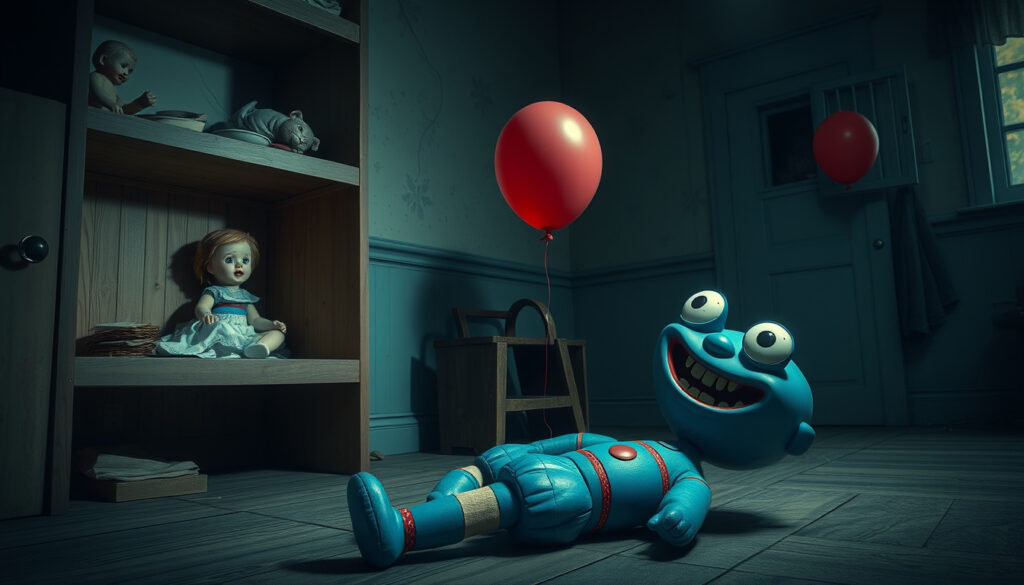
Huggy Wuggy: What Parents Need to Know About the Poppy Playtime Character
A tall, blue furry creature with a wide grin has become one of the most recognized characters in kids’ online spaces, yet many parents have never played the game he comes from. Huggy Wuggy is the main antagonist of *Poppy Playtime*, a horror-puzzle game released in October 2021 by MOB Entertainment. This guide uses verified ESRB and PEGI ratings, along with expert safety guidance, to help you separate the viral meme from the actual game content — and decide what’s right for your child.
First appearance: Poppy Playtime Chapter 1, October 2021 ·
Developer: MOB Entertainment ·
Character role: Main antagonist ·
Age rating (ESRB): Teen (13+) ·
Age rating (PEGI): 12+ ·
Google search spike: April 2022
Quick snapshot
- Huggy Wuggy is the main antagonist in Poppy Playtime Chapter 1 (ESRB rating authority)
- Poppy Playtime is rated Teen (13+) by ESRB and 12+ by PEGI (ESRB rating authority)
- The game features Blood, Mild Language, and Violence (ESRB rating authority)
- Poppy Playtime Chapter 1 was released in October 2021 (Common Sense Media parental reviews)
- Exact percentage of Huggy Wuggy videos categorized as “for kids” on YouTube (Safer Schools NI safeguarding authority)
- Long-term psychological effects on young viewers (Safer Rotherham Partnership community safety group)
- October 2021: Poppy Playtime Chapter 1 released (Common Sense Media parental reviews)
- April 2022: Huggy Wuggy goes viral; Forbes publishes parent guide (Safer Schools NI safeguarding authority)
- 2022–2023: Fan content proliferates on YouTube and TikTok (Safer Schools NI safeguarding authority)
- Poppy Playtime Chapters 2-5 rated PEGI 16 by Safer Schools NI (Safer Schools NI safeguarding authority)
- Later chapters require separate purchases (Common Sense Media parental reviews)
The ratings table below summarizes the official age classifications for the game across regions.
| Game | Poppy Playtime |
| Developer | MOB Entertainment |
| Release date | October 2021 |
| ESRB rating | Teen (13+) |
| PEGI rating | 12+ |
| Character type | Horror antagonist |
The pattern is clear: every independent rating board places this content outside the young-child range.
Is Huggy Wuggy child appropriate?
The short answer: it depends on the child’s age and sensitivity — but official ratings make the boundaries clear. The ESRB (the U.S. ratings board) rates Poppy Playtime: Triple Pack as Teen (13+) with descriptors for Blood, Mild Language, and Violence (ESRB rating authority). The PEGI (European) rating is 12+ for Chapter 1, rising to PEGI 16 for Chapters 2 through 5, according to a safeguarding update from Safer Schools NI (a U.K. school-safety authority).
A 10-year-old playing Chapter 1 is playing content rated for 12+, not 18+. But the jump to PEGI 16 in later chapters means older content escalates in intensity — and parents may not see that coming.
ESRB and PEGI ratings for Poppy Playtime
Poppy Playtime’s official ratings across different regions tell a consistent story: this is not a children’s game, despite its toy-like art style. Here’s how the ratings break down:
- ESRB (U.S.): Teen 13+ — Blood, Mild Language, Violence (ESRB rating authority)
- PEGI (Europe): 12+ (Chapter 1), 16+ (Chapters 2-5) (Safer Schools NI safeguarding authority)
- IMDb parental guide (U.S.): T / 13+ with moderate violence and gore (IMDb Parents Guide)
- IMDb parental guide (U.K.): PEGI 16 (IMDb Parents Guide)
The pattern: official game content is consistently rated for teens, not young children. The catch: fan-made content on YouTube and TikTok carries no rating at all.
What age is Huggy Wuggy appropriate for?
Common Sense Media, a trusted U.S.-based parental review organization, says the game “is likely too scary for younger audiences” and warns that later chapters must be purchased separately (Common Sense Media parental reviews). The Safer Rotherham Partnership (a U.K. community safety group) notes that while developers reportedly recommended the game for ages 8+, the content “may be frightening to young children despite being designed to appeal to them.”
The age ratings from the developers themselves (8+) are looser than both ESRB (13+) and PEGI (12+/16+). Parental guidance should follow the independent ratings, not the studio’s marketing.
What is the story behind Huggy Wuggy?
Understanding the narrative context helps parents gauge why the character scares some kids. The backstory is fictional — not based on true events — and set inside a toy factory called Playtime Co., where experiments went wrong.
- Huggy Wuggy was designed as a security toy in the game’s fictional 1984 (Common Sense Media parental reviews)
- He became hostile after a disaster at the factory (ESRB rating authority)
- The game’s narrative is fictional — it is not a true story (Common Sense Media parental reviews)
What happened at Playtime Co.?
Players explore an abandoned toy factory, piecing together audio logs and notes that reveal employees disappeared — and experiments on living toys went wrong. The game uses jump scares and chase sequences where Huggy Wuggy pursues the player through vents and corridors. Safer Schools NI describes the franchise as a “horror franchise” and warns that ratings cover the official game only, not fan content on Roblox, YouTube, or TikTok (Safer Schools NI safeguarding authority).
The trade-off: the story is compelling enough to hook curious kids, but the delivery — dark corridors, sudden appearances, chase music — is textbook horror pacing. A child who loves the character’s design may find the actual gameplay distressing.
Why is Huggy Wuggy so popular for kids?
Huggy Wuggy’s popularity with children surprised many parents — and the reasons are more about platform algorithms than game quality. The character’s visual design (a tall, blue, furry creature with a wide grin) blends toy-store friendliness with just enough edge to be memorable. But the real driver is short-form video.
What draws children to Huggy Wuggy?
Three factors converge to make Huggy Wuggy a kid magnet:
- Colorful design: Blue fur, red lips, big eyes — the character looks like a plush toy (Safer Rotherham Partnership community safety group)
- YouTube and TikTok algorithms: Catchy songs and dances boost visibility without age gates (Safer Schools NI safeguarding authority)
- Peer sharing at school: Viral content spreads fast among classmates (Our Safer Schools online safety education service)
The catch: the horror context is often downplayed or removed entirely in fan content aimed at children, making the character appear harmless. As Safer Rotherham Partnership community safety group notes, the design “may appeal to young children” while the actual game “may be frightening” — a gap kids themselves rarely recognize until they play.
Huggy Wuggy songs and dances
Short, repetitive songs featuring Huggy Wuggy have racked up millions of views on YouTube Kids, despite the platform’s age policies. A Forbes contributor, Andy Robertson, published a parent guide in April 2022 titled “Don’t Panic, What Parents Really Need To Know About Huggy Wuggy” (Safer Schools NI safeguarding authority). The article’s framing — “Don’t Panic” — reflects that much of the concern stems from unfamiliarity with the character rather than genuine danger. But the article also warns that content labels are inconsistent.
“Many videos tagged for kids include content from the game without age filters.”
Safer Schools NI (a U.K. school-safety authority)
“Don’t Panic, What Parents Really Need To Know About Huggy Wuggy.”
Andy Robertson, Forbes contributor (as cited by Safer Schools NI safeguarding authority)
Where do kids watch Huggy Wuggy?
The platforms where children encounter Huggy Wuggy matter as much as the game itself. Official game content is rated; the videos that go viral often are not.
YouTube and TikTok Huggy Wuggy content
Children primarily watch Huggy Wuggy videos on YouTube and TikTok, according to multiple safeguarding sources. Our Safer Schools (a U.K. online safety education service) states that “none of the games are age-restricted” on those platforms, meaning any video — including those with jump scares or horror themes — can appear in a child’s feed. The IMDb parents guide lists the game’s violence and gore as “moderate” (IMDb Parents Guide), but that classification only applies to the official game, not to fan edits that may amplify the scary elements.
Parents who check the rating (ESRB Teen / PEGI 12+) and see “not for young children” feel reassured. But the child isn’t playing the game — they’re watching a fan remix on YouTube that the ratings system never touches.
Is the content safe?
Parental guidance is recommended by every major safety organization that has examined the franchise. Our Safer Schools online safety education service states unequivocally that Poppy Playtime “should not be shared with young children.” Common Sense Media (a U.S.-based nonprofit parental review organization) warns that parents should know the game is episodic and later chapters require separate purchase — creating a financial as well as a content surprise for families who let kids play the free Chapter 1.
For parents of children aged 8-12: the safest approach is to watch Huggy Wuggy videos together first. Discuss whether the child understands the difference between the friendly-looking character in the thumbnail and the horror context of the game. Safer Rotherham Partnership community safety group provides a downloadable guide for parents — a concrete resource worth bookmarking.
Upsides
- Official game has clear age ratings (ESRB 13+, PEGI 12+/16+)
- Chapter 1 is free to try — allows preview before purchase
- Good conversation starter about horror vs. reality for older kids
- Fictional narrative, not based on real events
Downsides
- Ratings do not apply to fan content on YouTube/TikTok
- Character design appeals to kids who may find gameplay scary
- Later chapters rated PEGI 16 — escalation parents may miss
- No platform age-gating on Huggy Wuggy videos
esrb.org, newspaths.net, youtube.com, tcat.education, youtube.com, youtube.com, suomenviihde.fi
Frequently asked questions
What is the Huggy Wuggy song about?
Huggy Wuggy songs on YouTube and TikTok are short, repetitive fan-made tracks that usually mention the character’s name, his blue fur, and his wide grin. They often have a cheerful tune that contrasts with the horror context of the game. There is no official “Huggy Wuggy song” in the game itself.
How tall is Huggy Wuggy in the game?
Based on in-game measurements and fan analysis, Huggy Wuggy is approximately 18 feet tall. His height and lanky proportions are part of the horror design — he moves through the factory’s vents and corridors, chasing the player.
Can Huggy Wuggy be bought as a plush toy?
Yes. Official MOB Entertainment merchandise includes Huggy Wuggy plush toys, available through their store and retailers. These are designed to look like the friendly version of the character — not the horror version — which can add to the confusion for children who see both a cuddly toy and a scary game character.
Is there a Huggy Wuggy costume?
Fans have created homemade costumes, and some commercial costume versions appeared on marketplaces after the character’s viral spike in 2022. No official licensed costume has been announced by MOB Entertainment.
Does Huggy Wuggy appear in Poppy Playtime Chapter 2?
No. Huggy Wuggy is the main antagonist only in Chapter 1. Chapter 2 introduces a new antagonist called Mommy Long Legs. However, Huggy Wuggy continues to appear in fan content and memes across platforms.
Is the Huggy Wuggy dance a real game feature?
No. The dance animations are fan-made edits created for YouTube and TikTok. In the actual game, Huggy Wuggy chases the player — he does not dance. The dance videos are a meme format unrelated to the game’s content.
How do I set parental controls for Huggy Wuggy videos?
YouTube offers Restricted Mode and supervised accounts for children under 13. TikTok has Family Pairing that lets parents limit content. However, no platform tool can guarantee that all Huggy Wuggy content will be blocked, because the videos use different titles and tags. The most reliable method: watch with your child and discuss what they see.
The central tension for parents is not the game itself — it’s the gap between the character ratings (which are clear) and the viral video ecosystem (which is not). For U.K. and U.S. parents juggling a kid who loves the blue creature and a gut feeling that something’s off, the decision is not binary. You don’t have to ban or embrace. You can let a 10-year-old try Chapter 1 with you in the room, while blocking the YouTube rabbit hole of unrated jump-scare compilations. Or skip the game entirely and use the fan songs as a conversation starter about online content. The one choice that doesn’t work: assuming the cute thumbnail means safe content. Parents who check the rating and stop there miss the real risk — the unrated video feed just one click away.
More related posts
 TV Shows With David Tennant – Full List and Streaming Guide
 Stranded on Honeymoon Island – Baileys 118-Day Survival
 Go Ahead Eagles vs Aston Villa – 2-1 Result, Stats and Analysis
 England v Australia Rugby 2025: How to Watch Both Codes
 Amazon Locker Near Me: Find & Use for Package Pickup
 Irvine Welsh: Trainspotting, Books, Biography & Football Team
 Lorraine Warren: Real Life and Cases Behind The Conjuring
 American Akita: Temperament, Ownership, and Key Breed Differences