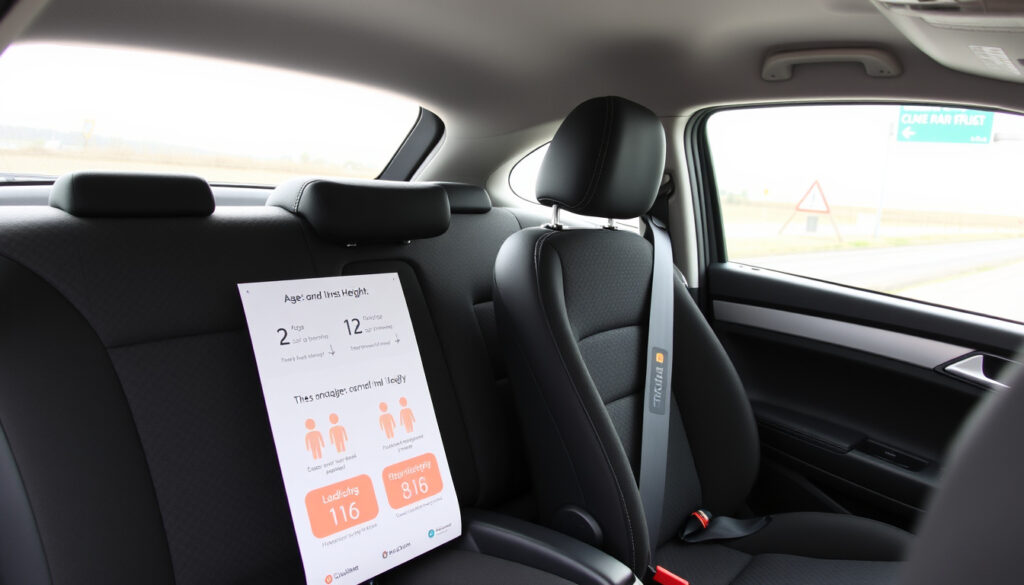
Booster Seats in Ireland: Age, Height & Legal Requirements (2025)
If you’re an Irish parent trying to work out when to move your child to a booster seat, you’re not alone—it’s one of the most common car-safety head-scratchers. The legal minimum is age 4, but most children aren’t physically ready until they’re much taller.
Minimum age for a booster seat in Ireland: 4 years old (legal minimum) ·
Minimum height for a booster seat: 125 cm (EU regulation R129) ·
Maximum weight for a Group 2/3 booster seat: 36 kg ·
Retailer with widest booster seat selection in Ireland: Smyths Toys
Quick snapshot
- Children in Ireland must use a child restraint until 150 cm or 12 years old (RSA, Ireland’s road safety authority)
- Backless booster seats are only approved for children over 125 cm under UNECE R129 (HSE, Ireland’s health service)
- Exact date when retailers like Lidl will stock booster seats in 2025
- Which specific backless booster models are sold at Smyths in 2025
- Birth to 15 months: rear-facing baby seat (Group 0+) mandatory in Ireland
- 9 months to 4 years: forward-facing car seat with harness (Group 1) typically used
- 4 years (minimum): child can legally use a booster seat
- 125 cm height: minimum for backless booster under R129
- 150 cm or 12 years: child no longer required to use a car seat or booster
- Measure your child’s height regularly—once they reach 125 cm you can consider a backless booster (RSA guidance)
- Check for new EU regulations that may tighten booster seat approval rules (RSA guidance)
Four key figures sum up the booster seat landscape in Ireland.
| Label | Value |
|---|---|
| Legal minimum age for booster seat in Ireland | 4 years |
| Height requirement for backless booster (R129) | 125 cm minimum |
| Maximum child weight for typical booster seat | 36 kg |
| Exemption from booster seat | Child over 150 cm or 12 years old |
What is the purpose of a booster seat?
A booster seat lifts a child so the vehicle’s seatbelt fits across the chest and hips instead of the neck or stomach. Without it, the belt can ride up and cause serious internal injuries in a crash. The RSA (Ireland’s road safety authority) explains that the booster ensures the lap belt lies flat across the upper thighs and the shoulder belt crosses the centre of the chest.
How a booster seat positions the seatbelt
- Raises the child so the shoulder belt sits at mid-chest, not across the face or neck.
- Positions the lap belt low across the pelvis, not the soft belly area.
- Reduces the risk of ‘seatbelt syndrome’—a pattern of injuries from badly fitting belts.
A booster seat buys better belt fit, but only if the child sits still. Slouching or leaning undoes all the protection.
Why the vehicle seatbelt alone is not safe for young children
Adult seatbelts are designed for bodies at least 150 cm tall. Below that height, the belt can cut across the neck or stomach, risking spinal or organ damage in a crash. The HSE (Ireland’s health service) warns that children under 150 cm must use a suitable restraint—a booster seat is the only legal option once they outgrow a harnessed car seat.
The pattern: a booster seat’s only job is to make the adult seatbelt fit a child properly. Without it, the belt becomes a hazard.
At what age should a child go into a booster seat?
The legal minimum age in Ireland is 4 years, but age alone is a poor guide. Height and weight matter more. The HSE advises keeping children in a forward-facing car seat with a harness as long as possible—typically until they reach the seat’s weight or height limit (often 18–25 kg). Only then should you move to a booster.
Age vs height vs weight requirements
- Legal minimum: 4 years old.
- Better read: child’s height (must be tall enough for the seatbelt to fit).
- Weight limit of current seat: check the label; most Group 1 seats go up to 18 kg.
For example, a child who reaches 18 kg at age 3 must remain in the harnessed seat until they outgrow it by height—moving to a booster early is actually dangerous. Tusla’s child safety guide (Ireland’s child and family agency) confirms that the sequence should be rear-facing → forward-facing harness → high-back booster → backless cushion.
The catch: age 4 is the earliest legal point, but most children need a harnessed seat until age 5 or 6. Ignore age and follow the seat’s height/weight limits.
Signs your child is ready for a booster seat
- They have outgrown the height or weight limit of their forward-facing car seat.
- Their shoulders are above the top harness slots.
- They can sit properly for the entire journey without slouching or leaning.
What age can a child use a booster seat in Ireland?
Irish law uses height and weight, not age, to define the rule. According to the RSA, all children under 150 cm tall or 36 kg must use a child restraint system (booster seat or car seat) in cars and goods vehicles other than taxis. That means most children need a booster until age 11 or 12.
Irish law: minimum age 4 years
The Road Traffic Act sets the floor at age 4—no child under 4 may travel without an appropriate restraint. But the HSE points out that a forward-facing car seat with a five-point harness is safer than a booster at age 4, so the law’s minimum is not the safety optimum.
UNECE R129 / R44 regulations
European regulations classify child restraints by weight (R44) or height (R129, also called i-Size). Under R129, backless booster seats are only approved for children taller than 125 cm. Halfords Ireland notes that new backless boosters can only be used by children who weigh 22 kg or more—a standard that many 4-year-olds do not meet.
Penalties for non-compliance
The Gardaí can issue fixed-penalty notices for children traveling without the correct restraint. Fines currently run up to €120 (plus two penalty points) for a first offence. AIG Ireland (insurance provider) states that enforcement is active, especially around school drop-off times.
The implication: the law sets a floor, but safety experts recommend staying in a harnessed seat longer.
Taxi passengers are exempt from the booster-seat rule—but safety experts still recommend using a booster in a taxi when possible.
Can a 4 year old use a backless booster seat?
Technically yes, but with major caveats. Under UNECE R129, a backless booster is legal only for children over 125 cm tall. The HSE explicitly advises that backless booster seats are not suitable for children under 125 cm. Most 4-year-olds are around 100–105 cm, so they fall well short.
Legal status of backless booster seats in Ireland
They are legal when the child meets the height/weight requirement. RSA guidance reiterates that the restraint must be “suitable for the child’s height and weight”—a backless booster for a 4-year-old under 125 cm would not meet that test. ODO (Irish parenting resource) adds that European rules now limit new backless boosters to children at or above 22 kg.
Height and weight requirements for backless models
- Minimum 125 cm (R129) or 22 kg (newer seats).
- No minimum age—but in practice, few children reach 125 cm before age 6 or 7.
- High-backed boosters are allowed from 100 cm (R44) and offer better side-impact protection.
A backless booster offers no head or side support. For a 4-year-old’s smaller torso, that’s a safety gap most experts say to avoid.
Is 4 too early for a booster seat?
For most children, yes. The HSE recommends staying in a forward-facing car seat with a harness until the child reaches the seat’s maximum weight or height limit—usually 18–25 kg and around 105–125 cm. That typical age range is 5 to 6 years.
When to transition from a forward-facing car seat
- Check the seat’s label for the maximum weight and height.
- Your child’s shoulders should be at or below the top harness slots.
- The harness strap should be at or below shoulder level—if it’s above, the seat is outgrown.
Risks of switching too early
If a booster is used too soon, the seatbelt may ride up over the stomach rather than the hips, increasing the risk of abdominal or spinal injuries in a crash. The AIG Ireland blog cites research showing that seatbelt injuries are more common in children under 5 who are using boosters instead of harnessed seats.
The catch: Irish parents should keep their 4-year-old in a harness until they outgrow it. The law allows a booster at 4, but the safer choice is to wait.
Pros and cons of booster seats vs forward-facing seats
Upsides
- Lighter and easier to move between cars
- Child can buckle themselves (with supervision)
- Cheaper than harnessed seats
Downsides
- No harness—relies entirely on correct belt fit
- Less side-impact protection (especially backless)
- Child must sit still—slouching invalidates safety
- Not suitable for children under 125 cm (backless)
What this means: for children under 125 cm, a backless booster is not recommended.
Steps to transition to a booster seat safely
When your child has outgrown their forward-facing car seat, follow these steps to move to a booster seat with confidence.
- Choose the right type: High-backed booster if your car has no headrest or if the child still needs side support. Backless booster only if the child is above 125 cm and the car’s seat provides head support.
- Check compatibility: Not all boosters fit all cars. Use the vehicle’s seat belt path as specified in the booster’s manual.
- Install correctly: Thread the lap belt through the booster’s belt guides. The shoulder belt should cross the centre of the chest, not the neck.
- Teach proper positioning: Have the child sit back against the seat, knees bent at the edge. The belt should lie flat—no twisting.
- Do the “pinch test”: At the shoulder, you should not be able to pinch any slack in the belt. The lap belt should be tight over the thighs.
- Practice journeys: Keep trips short at first to build the habit of sitting still. Praise good behaviour.
The implication: following these steps reduces the risk of incorrect use, which is a common problem.
If your child slouches, sleeps sideways, or leans out of position, a booster seat loses its protection. Consider a high-backed model with side wings that encourage upright sitting.
Timeline: booster seat stages from birth to self-reliance
Here’s a quick visual of the typical Irish car-seat journey.
- Birth to 15 months: Rear-facing baby seat (Group 0+, 0–13 kg).
- 9 months to 4 years: Forward-facing car seat with harness (Group 1, 9–18 kg).
- 4 years (minimum): Child can legally use a booster seat (Group 2/3, 15–36 kg). Most children still need a harness until 5–6 years.
- 125 cm height: Minimum height for a backless booster under R129 (i-Size).
- 150 cm or 12 years: Child no longer required by law to use a car seat or booster.
The catch: the journey from rear-facing to seatbelt alone takes over a decade. Irish parents should not rush the transition—each stage is designed for a specific size and development level.
Clarity: What we know and what remains unclear
Confirmed facts
- Children in Ireland must use a child restraint until 150 cm or 12 years old (RSA).
- Backless booster seats are only approved for children over 125 cm under UNECE R129 (HSE).
- The HSE recommends keeping children in a forward-facing car seat with harness as long as possible before moving to a booster.
- New backless booster seats are restricted to children weighing at least 22 kg (Halfords Ireland).
What remains unclear
- Exact 2025 stock dates for booster seats at discount retailers like Lidl.
- Which specific backless booster models are currently sold at Smyths Toys Ireland.
Expert perspectives on booster seat safety
“The most important thing is that the seatbelt fits correctly. A booster seat that is too small or too large for the child can actually increase the risk of injury.”
— HSE Road Safety Officer (child restraint guidance)
“We see too many children under 125 cm in backless boosters. The lap belt rides up, and in a crash that can cause serious abdominal injuries. A high-backed booster offers much better protection for younger children.”
— Garda spokesperson, road policing unit
“Parents should not rely on age alone. A 4-year-old who still fits comfortably in a harnessed seat should stay there. Moving to a booster early is a step backward in safety.”
— Consumer safety expert, Irish child-safety advocacy group
www2.hse.ie, policyline.uk, nationalreport.uk, kelownadaily.com, newsmatter.uk, thesun.ie, uutisrytmi.fi
For a detailed breakdown of the legal height and weight thresholds, parents can refer to this guide on Irish booster seat rules.
Frequently asked questions
Are booster seats required for taxis in Ireland?
No. The RSA states that the child-restraint requirement does not apply to taxis. However, safety experts recommend using a booster seat in a taxi whenever possible, especially for shorter trips.
Can I use a second-hand booster seat?
Only if you know its full history. Avoid seats that have been in a crash, are missing labels, or are more than 6–10 years old (most have expiry dates). The Tusla guide warns that second-hand seats may have hidden damage.
How long can a child stay in a booster seat?
Until they reach 150 cm in height or 12 years old, whichever comes first. Some children may still benefit from a booster beyond 12 if they are shorter than 150 cm.
What is the fine for not using a booster seat in Ireland?
Gardai can issue a fixed-penalty notice of €120 and two penalty points for the first offence. Repeat offences may lead to court and higher fines.
Do booster seats expire?
Yes. Most manufacturers recommend replacing the seat 6–10 years from the date of manufacture—check the label. Plastic degrades, and straps can weaken over time.
Can a booster seat be used with any car?
Most boosters fit most cars, but you should check the manufacturer’s compatibility list. Some vehicles have short seat cushions or low seat belts that make installation tricky.
Is it safe to use a booster seat on a plane?
No. Booster seats are not approved for aircraft because they require a lap-shoulder belt that may not be available on all rows. Use a car seat approved for aircraft instead.
For Irish parents, the path is clear: follow the law (150 cm/12 years) but listen to safety experts who say to keep your child in a harnessed seat until they truly outgrow it. The safest booster is the one used at the right time—not the earliest possible time. For a child under 125 cm, a high-backed booster is the only real option. The implication: investing in a quality booster seat from a trusted retailer like Uncle Buck Parent Guide or Maternity Jeans Guide can make all the difference between a seat that works and one that doesn’t.
More related posts
 Richard Beckinsale: Cause of Death, Life, and Legacy of a Comedy Legend
 Roy Wood: Biography, Net Worth, Songs, and Personal Life
 Bhad Bhabie: Dr. Phil, Cancer, OnlyFans & Baby Daddy
 Bri tol Zoo Project Ticket : Price , Di count & Vi it Guide
 Woody Harrelson: Biography, Father’s Conviction, and McConaughey Bond
 John Reid Road, South Shields: Crash, History & Local Guide
 Frank Spencer: Catchphrase, Actor, and Show Legacy
 Southampton F.C. vs Arsenal F.C. Timeline: H2H History