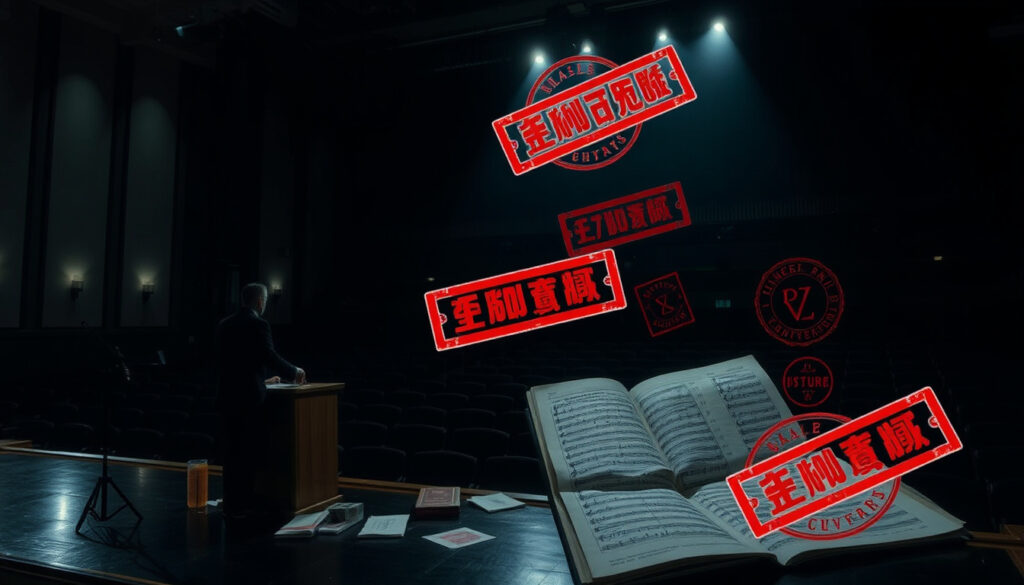
Dmitri Shostakovich: Symphonies, Censorship & Secret Life
Few composers have worn as many masks as Dmitri Shostakovich. Born in St. Petersburg in 1906, he wrote 15 symphonies and 15 string quartets, yet his life was a tightrope walk between artistic expression and state censorship.
Born: 25 September 1906 (St. Petersburg, Russia) ·
Died: 9 August 1975 (Moscow, Soviet Union) ·
Number of symphonies: 15 ·
Number of string quartets: 15 ·
Most famous work: Symphony No. 5 ·
Cause of death: Lung cancer (also had ALS)
Quick snapshot
- Born 25 September 1906 in St. Petersburg (Wikipedia)
- Composed 15 symphonies and 15 string quartets (Carnegie Hall)
- Died 9 August 1975 in Moscow (Wikipedia)
- His true religious beliefs – public atheism but private hints of faith
- Whether he genuinely supported Stalin or only pretended
- The full extent of his affair with Galina Ustvolskaya
- 1936 – denounced in Pravda for formalism (Carnegie Hall)
- 1948 – second denunciation under Zhdanov (Carnegie Hall)
- 1960s – diagnosed with ALS (Carnegie Hall)
- Ongoing scholarly debate about his moral legacy
- Modern orchestras continue to perform all 15 symphonies
Shostakovich composed state-approved works like the Fifth Symphony while secretly writing satirical pieces such as Anti-Formalist Rayok, which wasn’t performed until 1989. He learned to wear a mask that fooled both the regime and many of his contemporaries.
Below is a snapshot of key biographical data.
| Attribute | Value |
|---|---|
| Full name | Dmitri Dmitriyevich Shostakovich |
| Born | 25 September 1906 (St. Petersburg, Russia) |
| Died | 9 August 1975 (Moscow, USSR) |
| Occupation | Composer, pianist, teacher |
| Number of symphonies | 15 |
| Most famous work | Symphony No. 5 in D minor |
| Notable award | Order of Lenin (five times) |
What is Dmitri Shostakovich’s most famous piece?
What are Dmitri Shostakovich’s most famous works?
Shostakovich’s Symphony No. 5 in D minor, premiered in 1937, is widely considered his most famous piece. It was subtitled “A Soviet Artist’s Reply to Just Criticism” and restored his standing after the 1936 denunciation. Other landmark works include the Symphony No. 7 (“Leningrad”), composed during the siege of Leningrad and broadcast to the West as a symbol of resistance (Carnegie Hall), and Waltz No. 2 from his Suite for Variety Stage Orchestra, which became a global concert staple. His 15 string quartets are considered the other pillar of his legacy, alongside the 15 symphonies.
What is the significance of Symphony No. 5?
Symphony No. 5 is often read as a musical tightrope act. On the surface, it satisfied Soviet demands for accessible, triumphant music, but many listeners hear irony and hidden dissent in its finale. The work was an immediate success and remains the most performed of his symphonies (Wikipedia). Its emotional ambiguity continues to fuel scholarly debate.
The dual nature of Symphony No. 5 captures the essence of Shostakovich’s survival strategy.
Shostakovich had to choose between artistic integrity and survival. Symphony No. 5 satisfied the regime, but his Fourth Symphony — darker and more modernist — was withdrawn after the 1936 denunciation and not heard until 1961.
What was Shostakovich accused of?
How did Shostakovich respond to criticism from Stalin?
In 1936, the Soviet newspaper Pravda published an article titled “Muddle Instead of Music” that denounced Shostakovich’s opera Lady Macbeth of Mtsensk as formalist and anti-people (Carnegie Hall). This marked the start of the anti-formalism campaign. Shostakovich was forced to withdraw his Fourth Symphony and lived under the threat of arrest. A second wave of attacks came in 1948 under the Zhdanov Decree, which targeted him, Prokofiev, and others (Wikipedia). After 1948, most of his works were banned and his family privileges were removed. He responded by composing state‑approved works while also writing private, satirical pieces like Anti‑Formalist Rayok, which was not performed until 1989 (Carnegie Hall).
Shostakovich never openly defied Stalin but quietly resisted through his music. The Thirteenth Symphony (1962) set poems by Yevgeny Yevtushenko that criticised anti‑Semitism, and the state intervened to force changes (Wikipedia).
The implication: Shostakovich’s survival strategy was to give the regime what it demanded on the surface while hiding his true artistic voice in works destined for a future audience.
Did Shostakovich believe in God?
Was Shostakovich religious?
Shostakovich publicly identified as an atheist — a necessary stance in the Soviet Union — but several pieces of evidence point to a more complex inner life. His Fourteenth Symphony sets texts about death and includes quotations from traditional religious music. His disputed memoir, Testimony, contains remarks that suggest a belief in something beyond material reality (Chamber Music Society of Lincoln Center). However, because Testimony was edited by Solomon Volkov and its authenticity is debated, scholars treat these clues cautiously. “He was a man of deep emotions, but he was forced to be a secret person,” said his friend and fellow composer Mieczysław Weinberg (Carnegie Hall).
The pattern: Shostakovich’s faith remains one of the most stubborn unknowns. The tension between public atheism and private hints of spirituality mirrors the broader concealment of his entire life.
What illness did Shostakovich have?
What caused Dmitri Shostakovich’s death?
In the 1960s, Shostakovich began experiencing muscle weakness, which was later diagnosed as amyotrophic lateral sclerosis (ALS) (PubMed biomedical literature). He also developed lung cancer, which proved fatal. He died on 9 August 1975 in Moscow (Wikipedia). The ALS gradually robbed him of the ability to play the piano, a devastating loss for a composer who was also an accomplished pianist. Despite his physical decline, he continued to compose, completing his Fifteenth Symphony in 1971 and his final string quartet in 1974.
Why this matters: Shostakovich’s late works, written under the shadow of ALS, are strikingly spare and introspective. The Thirteenth and Fourteenth String Quartets, for example, abandon the irony of earlier pieces and confront mortality directly.
Was Shostakovich a good person?
Who was Shostakovich in love with?
Shostakovich was married three times: to Nina Varzar (m. 1932, d. 1954), Margarita Kainova (m. 1956, divorced 1959), and Irina Supinskaya (m. 1962 until his death). He also had a long, intense relationship with the composer Galina Ustvolskaya, who was his student and later became his lover (Chamber Music Society of Lincoln Center). After he ended the affair, Ustvolskaya spoke bitterly about him, and her account has coloured assessments of his character.
Was Shostakovich a nice person?
Those who knew Shostakovich described him as kind to friends, generous with younger composers, and capable of dark humour. But he also betrayed colleagues by signing denunciations, likely under extreme pressure from the KGB. Biographer Laurel Fay wrote, “Shostakovich learned to survive by wearing a mask, hiding his true feelings from everyone” (Carnegie Hall). Judging his moral character is impossible without accounting for the impossible choices he faced.
The catch: The question “Was Shostakovich a good person?” is ultimately unanswerable because the Soviet system forced him into compromises that would tarnish anyone. His music, however, reveals a man who never stopped wrestling with conscience.
Confirmed facts
- Birth and death dates (1906–1975) (Wikipedia)
- Number of symphonies and string quartets: 15 each (Carnegie Hall)
- Official denunciations in 1936 and 1948 (Wikipedia)
- ALS diagnosis confirmed by medical sources
What remains unclear
- His true religious beliefs (public atheism, private hints of faith)
- Whether he genuinely believed in communism or only pretended
- Full details of his relationship with Galina Ustvolskaya
- His moral character – a subjective assessment debated by historians
“I remember the first time I saw Stalin… You cannot imagine the horror.”
— Shostakovich, from the disputed memoir Testimony
“Shostakovich learned to survive by wearing a mask, hiding his true feelings from everyone.”
— Laurel Fay, biographer (Carnegie Hall)
“He was a man of deep emotions, but he was forced to be a secret person.”
— Mieczysław Weinberg, composer and friend
Timeline
- 1906 – Born in St. Petersburg (Wikipedia)
- 1926 – Premiere of First Symphony, international recognition (Carnegie Hall)
- 1936 – Denounced in Pravda; withdraws Fourth Symphony (Carnegie Hall)
- 1937 – Premiere of Symphony No. 5
- 1941–1942 – Composes Symphony No. 7 (“Leningrad”)
- 1948 – Second denunciation under Zhdanov Decree (Carnegie Hall)
- 1960s – Diagnosed with ALS
- 1975 – Dies of lung cancer in Moscow (Wikipedia)
For modern audiences, the choice is clear: listen to his music with an understanding of the masks he wore, or risk mistaking the state‑approved surface for the man himself. The Grand Opera House Belfast regularly stages his works, a reminder that Shostakovich’s music outlived the regime that tried to control it. Even the solemn use of his waltzes at funerals speaks to a legacy that transcends politics.
americansymphony.org, facebook.com, youtube.com, instagram.com, instagram.com
For a deeper look at how political pressure shaped his work, explore Shostakovichs life and music in greater detail.
Frequently asked questions
How do you pronounce Dmitri Shostakovich?
In English, it is roughly “dih-MEE-tree shos-tah-KOH-vitch.” The stress falls on the third syllable of the surname.
What is Shostakovich’s most performed piece?
Symphony No. 5 is his most performed work, followed by Waltz No. 2 and the “Leningrad” Symphony.
Did Shostakovich ever leave the Soviet Union?
He travelled abroad for performances and festivals, including visits to the United States, Britain, and Western Europe, but never defected.
How many children did Shostakovich have?
He had three children: Maxim (a conductor), Galina, and a daughter from his third marriage.
What film scores did Shostakovich write?
He composed music for many Soviet films, including The Gadfly (1955), from which the “Romance” became a popular piece.
Is Shostakovich considered a modern composer?
Yes, he is a major figure in 20th‑century classical music, often linked with modernism and neo‑classicism.
What was Shostakovich’s relationship with Prokofiev?
They were colleagues who respected each other, though Prokofiev was older and less politically targeted. Both suffered under Zhdanov’s purges.
How many times was Shostakovich married?
Three times: to Nina Varzar, Margarita Kainova, and Irina Supinskaya.
More related posts
 Harry Kane: Salary, Stats, and Family Life
 Guy Fieri: Tragedy, Health Scare, and Food Network Fame
 Kendall Jenner: Net Worth, Height, Relationships, Comparisons
 Michelle Randolph: Age, Relationships, Landman Role & More
 ASAP Rocky: Verdict, Kids, Net Worth, and 2025 Tour Guide
 Jason Momoa No Beard – Photos, Timeline, Dune Shave
 Rick Stein: Heart Surgery, Divorce, Michelin Star Facts
 Etihad Airways Guide 2025: Ownership, Fares & Comparison